
Bare concrete floors in garages, basements, and workshops slowly wear down over time—especially in Wisconsin, where snow, road salt, freeze-thaw cycles, and tracked-in moisture can be brutal on concrete. If you live in Appleton, Green Bay, Oshkosh, or anywhere in the Fox Valley and Northeast Wisconsin, early warning signs like dusting, stains, cracks, or slippery surfaces may mean it is time to consider a protective floor coating.
This guide covers 10 common signs your concrete floor may need a coating and explains why addressing those issues early can help protect the slab, improve safety, and make the space easier to maintain.
Table of Contents
1. Concrete Dusting
If your garage floor always seems dusty no matter how often you sweep, the concrete surface may be starting to break down.
This is often called concrete dusting. It happens when the top layer of the slab slowly deteriorates into a fine powder. In Wisconsin garages, this is common when moisture, road salt, and everyday traffic repeatedly wear down bare concrete.
Signs of dusting may include:
- Fine gray powder collecting along walls or corners
- Footprints showing up after you just swept
- Storage bins, tools, or shelves picking up a dusty residue
A professional floor coating helps seal the surface and stop that ongoing breakdown.
2. Hairline Cracks
Small cracks are common in concrete floors, especially in climates like Wisconsin where repeated freeze-thaw cycles cause materials to expand and contract.
Hairline cracks may not seem like a big deal at first, but they can widen over time as moisture works into the slab and seasonal movement continues.
Typical causes include:
- Seasonal temperature changes
- Normal settling over time
- Vehicle traffic and weight
- Water entering small surface fractures
Professionally installed coating systems usually include crack repair as part of the preparation process before the floor is sealed.
3. Permanent Oil or Salt Stains
Concrete is porous, which means liquids can soak into the surface instead of sitting on top of it. Over time, oil, antifreeze, rust, and road salt can leave stains that are difficult—or impossible—to fully remove.
Homeowners often notice:
- Dark oil spots that keep showing through
- White salt residue after winter
- Rust stains from tools, equipment, or stored items
- Discoloration where vehicles are typically parked
A floor coating creates a protective barrier that helps prevent liquids and contaminants from penetrating the slab.
Not sure if your floor needs coating?
We can take a quick look and give you an honest recommendation based on the condition of your concrete.
4. Moisture or Damp Spots
Some concrete floors develop moisture-related problems, especially in garages and basements where groundwater pressure or vapor movement can affect the slab.
Signs of moisture issues may include:
- Damp areas that appear without any obvious spill
- Dark patches that come and go
- Efflorescence, or white mineral deposits on the surface
- Musty smells in enclosed spaces
This does not always mean the slab is failing, but it does mean the floor should be evaluated carefully before applying any coating. Proper surface prep and product selection matter a lot here.
5. Surface Wear and Pitting
Bare concrete floors often become rough, chipped, or pitted over time. This is especially common in garages that see years of vehicle traffic, winter salt, and repeated exposure to water.
Surface wear may show up as:
- Small pits or shallow holes in the slab
- Chipping near control joints or edges
- Rough or uneven surface texture
- General wear in tire paths or walking areas
Once this kind of deterioration starts, it usually continues unless the surface is repaired and protected.
6. Slippery Concrete When Wet
In Wisconsin winters, garages and entry-side concrete surfaces often become wet from snow, slush, and melting ice. Snowblowers, shovels, boots, and vehicles all track moisture inside.
Even concrete that looks fine can become surprisingly slick when wet, especially if it has a smooth finish. That can create a real safety issue when you are carrying tools, stepping in with snowy boots, or walking around a vehicle dripping meltwater.
Common situations where homeowners notice this include:
- Walking in from outside with snow-covered boots
- Parking a vehicle coated in snow or slush
- Rolling a snowblower or shovel back into the garage
- Water collecting near the garage door during thaw cycles
Many professional floor coating systems can include a textured or flake finish to help improve traction while still making the floor easier to clean.
7. Concrete Is Hard to Keep Clean
If it feels like your floor never really looks clean—even right after sweeping or mopping—the problem may be the concrete itself.
Because bare concrete is porous, dirt, dust, grime, oil, and salt tend to settle into the surface. Instead of cleaning off easily, they cling to the slab and leave the floor looking worn and dirty.
Homeowners often notice:
- Dirty-looking concrete shortly after cleaning
- Tire marks that are hard to remove
- Dark spots that seem permanent
- Dust and debris sticking to rough areas
A sealed coating system closes off those pores and creates a more cleanable surface that is easier to maintain.
8. Your Garage Floor Looks Worn or Dated
A garage floor does not have to be structurally damaged to need attention. Sometimes it simply looks tired.
Concrete floors often start out fairly uniform, but after years of use they can become stained, faded, patchy, and uneven in color. That worn appearance affects the whole space, even if the rest of the garage is organized and well kept.
This may look like:
- Old stain marks from leaks or storage
- Discoloration from road salt or chemicals
- A dull, blotchy, inconsistent appearance
- A garage that feels older than it really is
Decorative floor coating systems can improve the look of the garage while also adding protection and durability.
9. You Use Your Garage for More Than Parking
Many garages are no longer just for vehicles. Homeowners often use them as workshops, storage areas, home gyms, hobby spaces, or utility zones.
If that sounds like your garage, the floor matters more than people think. Bare concrete can be dusty, rough, cold-looking, and harder to keep clean in a space you use every day.
You may benefit from a coating if your garage is also used for:
- Tool benches or project work
- Exercise equipment or workout space
- Seasonal storage and organization
- Household overflow or hobby use
A properly coated floor helps the space feel cleaner, more finished, and easier to maintain.
10. You Want to Protect the Floor Before Damage Gets Worse
Sometimes the best reason to coat a concrete floor is prevention.
Even if your slab is still in decent condition, protecting it now can help reduce future damage from winter moisture, road salt, vehicle traffic, chemical spills, and everyday wear.
Applying a coating before the floor gets worse may help prevent:
- Surface wear from repeated use
- Permanent staining from oil and salt
- Moisture-related deterioration
- More extensive repairs later on
In many cases, it is smarter to protect a floor early than to wait until the slab looks rough and beat up.
Garage Floor Coatings in Wisconsin Homes
Garage floors in Wisconsin face harsher conditions than floors in many other parts of the country. Road salt, snow, freeze-thaw cycles, and tracked-in moisture all add wear to bare concrete over time.
Homeowners across Appleton, Green Bay, and the Fox Valley often notice these issues first in the garage because that is where vehicles, boots, shovels, and snowblowers bring in the mess of winter. Even normal foot traffic can leave wet patches and salt residue behind.
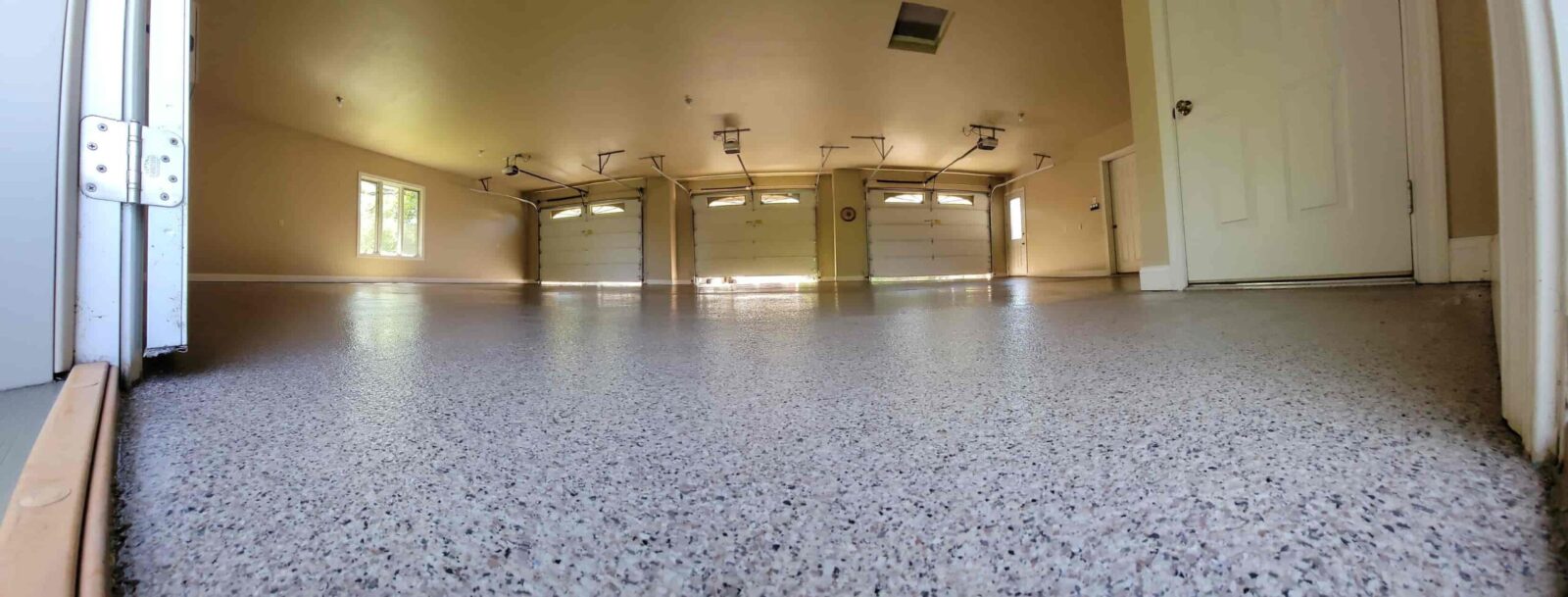
Professional garage floor coatings are designed to help protect against these conditions. Whether the system is polyurea or epoxy, the goal is the same: create a durable barrier that helps shield the slab from moisture, stains, wear, and surface deterioration.
For many homeowners, a coated garage floor also improves how the space looks and functions day to day.
Why Protective Floor Coatings Help
Modern concrete coating systems do more than improve appearance. They help protect the slab and make the space easier and safer to use.
Benefits may include:
- Protection from salt, moisture, and chemicals
- Improved resistance to chips, wear, and surface damage
- Easier cleanup and less concrete dust
- Better traction with textured finish options
- A cleaner, more finished-looking garage or basement
The big caveat: the coating is only as good as the prep. Surface grinding, repairs, moisture evaluation, and the right product system all matter.
How Much Does a Garage Floor Coating Cost?
Cost depends on the size of the space, the condition of the concrete, how much prep is needed, and the coating system used.
In many cases, professionally installed garage floor coatings fall somewhere around $5 to $8 per square foot, though some projects may be lower or higher depending on repairs, moisture issues, and finish choices.
The best way to get an accurate number is a quick estimate based on your actual floor and its condition.
FAQ
Do all concrete garage floors need a coating?
Not necessarily. But if your floor is dusty, cracked, stained, slippery when wet, or hard to keep clean, a coating may help protect it before damage gets worse.
Can a coating help with slippery concrete?
Yes. Many professional systems can include a textured or flake finish that improves traction compared to bare smooth concrete, especially when moisture is tracked in from snow and slush.
Is epoxy or polyurea better for Wisconsin garages?
Both can work, but the right choice depends on the condition of the slab, the environment, and the goals for the space. Proper prep and installation are just as important as the coating type.
Can cracked or worn concrete be repaired before coating?
Yes. In many cases, cracks, pits, and minor surface damage can be repaired during the preparation phase before the coating is applied.
How long do professional floor coatings last?
A professionally installed system can last for years when the concrete is properly prepared and the coating is maintained appropriately.
Bottom Line
If your concrete floor is dusty, cracked, stained, worn, slippery when wet, or simply hard to keep clean, it may be time to consider a protective coating.
At Action Painting & Epoxy Coatings, we install durable polyurea and epoxy floor systems designed to stand up to Wisconsin weather and everyday garage use.
Request a Floor Coating Estimate
If your garage or basement floor is showing signs of wear, cracking, stains, or slippery spots, we can take a look and recommend the right coating system for your space.
Free estimates for homeowners in Appleton, Neenah, Menasha, Oshkosh, Green Bay, and throughout the Fox Valley and Northeast Wisconsin.
Want a straight answer on whether your floor is a good candidate? Fill out the form below and we’ll reach out.